


SLC Management -

Q4 2025: Investment Grade Private Credit Update

IAUM Article - 2026-03-13T104101.195

Tuning out the white noise in private credit

Placement volumes remained healthy in Q4 2025, powered by strong investor demand. This occurred despite an uncertain macro environment, and recent, highly public defaults in specific corners of the private credit universe merit a more comprehensive look at these asset classes. 

Market statistics for the private placement market sourced from Private Placement Monitor, a standard proxy for the investment grade (IG) private credit market. Other market data supplied by Bloomberg.

Markets
The fourth quarter of 2025 marked a continuation of the momentum built up throughout the year in private fixed income markets. Despite persistent macroeconomic uncertainties and trade policy challenges, IG private placement issuance volumes continued to remain strong. Early indications suggest that IG private placement issuances could exceed US$170 billion, surpassing the previous record year of 2024. Investor demand remained exceptionally strong, driving oversubscription rates on new issuances and contributing to further spread tightening across sectors.

The secondary market has also emerged as a dynamic and integral component of the IG private credit ecosystem, enabling investors to rebalance portfolios, manage liquidity and access new investment opportunities. In terms of volume, secondary trades from leading brokers were estimated at between US$3 billion–US$4 billion annually. The entry of a new broker focused on private credit in 2025 pushed the estimated total volume to approximately US$5 billion.

The corporate private placement market saw continued momentum, building on the robust activity experienced throughout 2025. Demand remained strong with many deals in the quarter being 5–10-times oversubscribed, reflecting persistent investor appetite. Spreads generally tightened by an average of 5 basis points (bps) from initial guidance early in the fourth quarter, though the customary year-end “December premium” emerged, with some deals pricing up to 20 bps wider than initial guidance.

Business development companies (BDCs) remained a focal point, with typical issuances averaging US$250 million–US$300 million, more than five-times oversubscribed, and pricing in average about 10 bps tighter than initial guidance.

Outlook
Heading deeper into 2026, the supply–demand imbalance continues to favor issuers, in our view. However, the competitive environment has led to notable spread compression, particularly in IG private placements and structured credit. The secondary market is poised for further evolution and growth, as new participants continue to enhance liquidity and broaden access.

In focus
Digging beneath the headlines: the true resilience of IG private credit
Private credit continues to draw growing attention as the asset class expands as a robust, diversified and scalable market. Including corporate private placements, asset-backed finance (ABF) and bespoke capital solutions, the global private credit market has recently reached $3.5 trillion in estimated assets under management (source: Alternative Credit Council, 2026). As the market’s scope increases, news headlines often highlight pockets of stress, particularly conflating IG private credit with the much smaller non‑IG segment of the broader private credit universe. This reinforces the importance of distinguishing between different parts of the market. As we’ll discuss in this document, the performance trends of IG private credit have been strong (including low impairment rates, defaults and losses), but in our view are often confused with riskier forms of lending or are being misrepresented as opaque.

Recent headlines have spotlighted distress and defaults among certain private credit issuers, raising questions about the health and resilience of the broader sector. While these stories capture attention, they often conflate the risks of leveraged lending and non-IG credit with the fundamentally different profile of IG private credit. Both asset classes may have a place in a given investment strategy, but they remain separate and distinct nonetheless. Therefore, it’s critical for investors to look past the headlines and understand the true nature of the IG private credit market, which continues to demonstrate robust risk management and attractive risk-adjusted returns.

High-profile defaults and allegations of collateral fraud in leveraged lending have led to concerns about systemic risk in private credit. However, data and experience show that these events are isolated and typically, though not always, confined to the non-IG segment. For example, the collapse of a notable auto parts company during the latter half of 2025 has been discussed in conjunction with private credit lending practices. While this was a private company, most of its debt is not truly considered private credit as it was originated by banks or distributed to investors via the broadly syndicated market. All forms of lending carry risks – however, supply chain financing and off-balance sheet factoring, two significant sources of capital raising for the company, carry particularly acute risks that were exacerbated by elevated interest rates and tariff-related costs. With automotive parts being a cyclical industry to begin with, this combination of factors prompted the three major rating agencies (Moody’s, S&P and Fitch) to rate the company ‘B’ a year prior to its default announcement. This context underscores that such defaults are not indicative of systemic weakness but rather circumstantial risks that may lead to ratings downgrades prior to default. The long-term default rate in non-IG loans supports this assertion, at about 3.5%, and recent upticks are reflective of a reversion to historical norms rather than a market wide crisis.

U.S. private placement market volume (US$, billions)

Image
us-private-placement-market-volumn


Sources: Private Placement Monitor, 2025

As private credit continues to grow, it requires more focus. Historically, it has outperformed public credit on the basis of returns, defaults and losses, with leveraged lending or sub-IG assets representing a very small subset of less than 10% (source: S&P Global Market Intelligence). This outperformance is not just an illiquidity premium: it represents true alpha derived from tailored, customizable solutions. Despite the majority of private credit being IG, much of the coverage it receives mischaracterizes it to be the much smaller sub-IG portion, which naturally exhibits higher default rates. The riskier areas of private credit certainly warrant scrutiny, but they should not define the entire market.

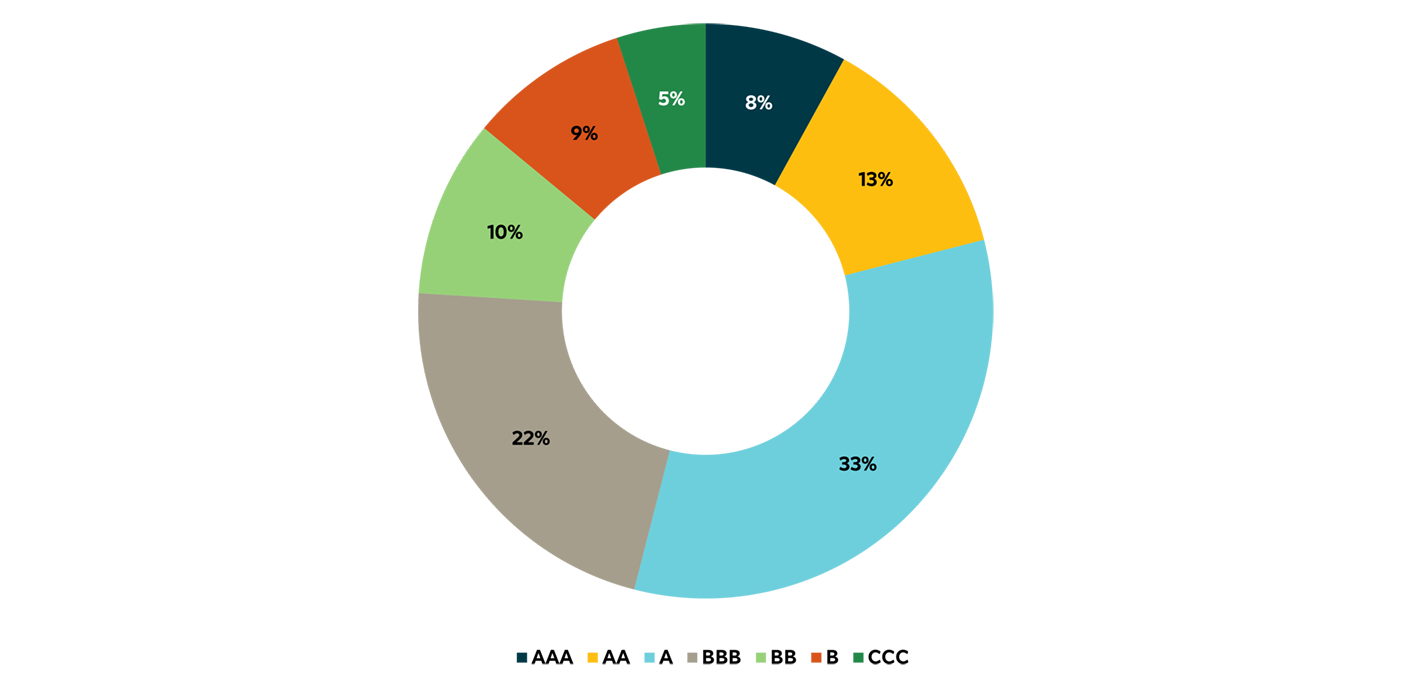
Private credit rating distribution in the life insurance sector

Image
private-credit-rating-distribution-in-the-life-insurance-sector


Sources: S&P Capital IQ, as of Q4 2024.

Private credit has been around for decades as a flexible, bespoke and high quality financing solution. In fact, over 75% of private credit held on life insurer balance sheets, one of the largest homes for private credit, is considered IG, with historical performance commensurate to the rating profile (source: S&P Capital IQ). Over the past 15 years, life insurers have increased their allocation to private credit from 25% to 45%, the majority of the increase being IG. The renewed interest in the asset class can be attributed to a variety of factors, though the strong risk-adjusted returns it achieves are paramount among investors – default rates among private credit loans have historically been lower than syndicated loans, despite the former commanding a yield premium (source: U.S. Federal Reserve). However, recent bankruptcies in the space serve as a stark reminder that all credit carries risk, and the impetus is on investors and managers to underwrite and adjudicate credit appropriately to risk.

Another well-known recent bankruptcy was of a U.S. used car retailer. At the time of this company’s collapse, it had multiple securitization issuances actively trading, all of which contained tranches with IG ratings from major rating agencies.  While relatively infrequent, fraud translating into credit impairments is not confined to any single segment of the market, nor is it structured for any particular asset class. It can occur in both private and public markets and affect issuers across the credit spectrum, including those with IG and non-IG ratings.

The potential benefits of IG private credit

Notwithstanding these recent bankruptcies, performance remains strong in IG private credit, with impairment rates among such deals consistently low over the past decade as the asset class rises in prominence. Annual impairment rates for IG private credit assets range from 6–10 bps over the past 10 years, the majority of which is attributable in recent years to corporate and real estate write downs stemming from pandemic-induced factors. In part, this is attributable to the strong covenant packages, collateral and security negotiated in private transactions, typically more robust than what is offered in the syndicated markets. While the market may appear obscure from afar, the detailed reporting and line-of-sight directly with issuers often makes for the opposite case.

Despite healthy performance trends, particularly during periods of economic headwinds, the advantages of the asset class are sometimes overlooked. The potential benefits of IG private credit can include:

  • Enhanced yield without sacrificing credit quality: yield premiums over public markets, with spread premiums up to 100+ bps (source: Cambridge Associates).
  • Diversification – financing solutions tailored to unique borrower needs, often inaccessible in public markets.
  • Comprehensive covenants and collateral – tailored covenants, collateralization and small lender groups provide additional layers of due diligence and protection.
  • Low default and loss rates – historical performance supports the sector’s resilience. Investors should seek experienced managers able to carefully select and underwrite transactions with default and loss rates well below long-term averages of similarly rated public portfolios.

While headlines may raise valid concerns about certain corners of private credit, we believe IG private credit remains a distinct, risk-managed asset class, offering attractive return potential, robust protections and resilience through market cycles. SLC Management continues to prioritize selectivity, transparency and discipline, seeking opportunities for our clients that reflect the true strengths of private credit – well beyond the headlines.

Sources: Private Placement Monitor, Bloomberg, Preqin, Alternative Investment Management Association, S&P Global Market Intelligence, S&P Capital IQ, U.S. Federal Reserve, SNL Financial, Barclays, BlackRock, Cambridge Associates, Alternative Credit Council, 2025–6.


READ MORE FROM SLC MANAGEMENT


Disclosure

© 2026, SLC Management

Any reference to a specific asset does not constitute a recommendation to buy, sell or hold or directly invest in it. It should not be assumed that any investment will be profitable or will equal the results of the assets discussed in this document. Any assets referred to herein represent investments of SLC Fixed Income, which are managed on a discretionary and non-discretionary basis for Sun Life's General Account and certain third-party clients. SLC Management is the brand name for the institutional asset management business of Sun Life Financial Inc. (“Sun Life”) under which Sun Life Capital Management (U.S.) LLC in the United States, and Sun Life Capital Management (Canada) Inc. in Canada operate. Sun Life Capital Management (Canada) Inc. is a Canadian registered portfolio manager, investment fund manager, exempt market dealer and in Ontario, a commodity trading manager. Sun Life Capital Management (U.S.) LLC is registered with the U.S. Securities and Exchange Commission as an investment adviser and is also a Commodity Trading Advisor and Commodity Pool Operator registered with the Commodity Futures Trading Commission under the Commodity Exchange Act and Members of the National Futures Association. Unless otherwise stated, all figures and estimates provided have been sourced internally and are as of 09/30/2025. Unless otherwise noted, all references to “$” are in U.S. dollars. Past performance is not indicative of future results. Nothing herein constitutes an offer to sell or the solicitation of an offer to buy securities. The information in these materials is provided solely as reference material with respect to the Firm, its people and advisory services business, as an asset management company. Market data and information included herein is based on various published and unpublished sources considered to be reliable but has not been independently verified and there is no guarantee of its accuracy or completeness. This content may present materials or statements which reflect expectations or forecasts of future events. Such forward-looking statements are speculative in nature and may be subject to risks, uncertainties and assumptions and actual results which could differ significantly from the statements. As such, do not place undue reliance upon such forward-looking statements. All opinions and commentary are subject to change without notice and are provided in good faith without legal responsibility. Unless otherwise stated, all figures and estimates provided have been sourced internally and are current as at the date of the paper unless separately stated. All data is subject to change. This information is not intended to provide specific financial, tax, investment, insurance, legal or accounting advice and should not be relied upon and does not constitute a specific offer to buy and/or sell securities, insurance or investment services. Investors should consult with their professional advisors before acting upon any information contained in this paper. An investor may not invest directly in an index. No part of this material may, without SLC Management’s prior written consent, be (i) copied, photocopied or duplicated in any form, by any means, or (ii) distributed to any person that is not an employee, officer, director, or authorized agent of the recipient. This material is intended for institutional investors only. It is not for retail use or distribution to individual investors. Nothing in this presentation should (i) be construed to cause any of the operations under SLC Management to be an investment advice fiduciary under the U.S. Employee Retirement Income Security Act of 1974, as amended, the U.S. Internal Revenue Code of 1986, as amended, or similar law, (ii) be considered individualized investment advice to plan assets based on the particular needs of a plan or (iii) serve as a primary basis for investment decisions with respect to plan assets. Data presented in this article have been calculated internally based on external market data sourced from Private Placement Monitor and other sources. Financial markets are volatile and can fluctuate significantly in response to company, industry, political, regulatory, market, or economic developments. Investment-grade credit ratings of our private placements portfolio assets are based on a proprietary, internal credit rating methodology that was developed using both externally purchased and internally developed models. This methodology is reviewed regularly. More details can be shared upon request. There is no guarantee that the same rating(s) would be assigned to portfolio asset(s) if they were independently rated by a major credit ratings organization. Investments involve risk, including loss of principal. Diversification does not guarantee against loss or ensure a profit. Nothing herein constitutes an offer to sell or the solicitation of an offer to buy securities. The information in these materials is provided solely as reference material with respect to the Firm, its people and advisory services business, as an asset management company.

About SLC Management

SLC Management is the brand name for the institutional asset management business of Sun Life Financial Inc. (“Sun Life”) under which Sun Life Capital Management (U.S.) LLC in the United States, and Sun Life Capital Management (Canada) Inc. in Canada operate.

Sun Life Capital Management (Canada) Inc. is a Canadian registered portfolio manager, investment fund manager, exempt market dealer and in Ontario, a commodity trading manager. Sun Life Capital Management (U.S.) LLC is registered with the U.S. Securities and Exchange Commission as an investment adviser and is also a Commodity Trading Advisor and Commodity Pool Operator registered with the Commodity Futures Trading Commission under the Commodity Exchange Act and Members of the National Futures Association.

BentallGreenOak, InfraRed Capital Partners (InfraRed), Crescent Capital Group (Crescent), and Advisors Asset Management are also part of SLC Management.

BentallGreenOak is a global real estate investment management advisor and a provider of real estate services. In the U.S., real estate mandates are offered by BentallGreenOak (U.S.) Limited Partnership, who is registered with the SEC as an investment adviser, or Sun Life Institutional Distributors (U.S.) LLC, an SEC registered broker-dealer and a member of the Financial Industry Regulatory Authority (“FINRA”) . In Canada, real estate mandates are offered by BentallGreenOak (Canada) Limited Partnership, BGO Capital (Canada) Inc. or Sun Life Capital Management (Canada) Inc. BGO Capital (Canada) Inc. is a Canadian registered portfolio manager and exempt market dealer and is registered as an investment fund manager in British Columbia, Ontario and Quebec.

InfraRed Capital Partners is an international investment manager focused on infrastructure. Operating worldwide, InfraRed manages equity capital in multiple private and listed funds, primarily for institutional investors across the globe. InfraRed Capital Partners Ltd. is authorized and regulated in the UK by the Financial Conduct Authority.

Crescent Capital Group is a global alternative credit investment asset manager registered with the U.S. Securities and Exchange Commission as an investment adviser. Crescent provides private credit financing (including senior, unitranche and junior debt) to middle-market companies in the U.S. and Europe, and invests in high-yield bonds and broadly syndicated loans.

Securities will only be offered and sold in compliance with applicable securities laws.

AAM is an independent U.S. retail distribution firm that provides a range of solutions and products to financial advisors at wirehouses, registered investment advisors and independent broker-dealers.

Website content

The content of this website is intended for institutional investors only. It is not for retail use or distribution to individual investors. All investments involve risk including the possible loss of capital. All asset classes have associated risks. Certain asset classes are speculative, can include a high degree of risk and are suitable only for long-term investment. Further information available upon request. This website is for informational and educational purposes only. Past performance is not a guarantee of future results.

The information contained in this website is not intended to provide specific financial, tax, investment, insurance, legal or accounting advice and should not be relied upon and does not constitute a specific offer to buy and/or sell securities, insurance or investment services. Investors should consult with their professional advisors before acting upon any information contained on this website. The assets under management (AUM) represent the combined AUM of Sun Life Capital Management (Canada) Inc., Sun Life Capital Management (U.S) LLC, BentallGreenOak, Crescent Capital Group, InfraRed Capital Partners, and Advisors Asset Management.

AUM as of December 31, 2025. Total firm AUM includes assets managed by the SLC Management group of companies on behalf of external clients, and the Sun Life General Account. AUM includes unfunded commitments, cash, equity, and other balances. Total firm AUM excludes assets under administration.

The methodologies used to compile the total AUM are subject to change and may not reflect regulatory AUM. More information is available upon request.

Currency conversion rate: USD $1.00 CAD $1.3724 as of December 31, 2025.

SLC Management Newsroom: SLC-20221101-2566004

UK Tax Strategy - InfraRed (UK) Holdco 2020 Limited

InfraRed (UK) Holdco 2020 Ltd is the UK holding company of InfraRed Partners LLP and a subsidiary of Sun Life (U.S.) Holdco 2020 Inc, which has its headquarters in the U.S. The company was incorporated to purchase InfraRed Partners LLP and acts solely as a passive holding company. The Tax Strategy for the InfraRed Holdco Group sets out our approach to the management of InfraRed Holdco Group UK tax affairs in supporting business activities in the UK.

This UK tax strategy is published in accordance with the requirements set out in Schedule 19 of Finance Act 2016. The strategy, which has been approved by the Board of Directors of InfraRed (UK) Holdco 2020 Ltd, is effective for the period ending 31 December 2024. It applies to InfraRed (UK) Holdco 2020 Ltd and its dormant subsidiary Sun Life (UK) Designated Member Ltd, referred to as the “InfraRed Holdco Group”. InfraRed Holdco Group.

Share this post

Sign Up Now for Full Access to Articles and Podcasts!

Unlock full access to our vast content library by registering as an institutional investor

Register

Contacts


SLC Management

The SLC Global Insurance Group provides access to a diverse suite of investment capabilities across public and private credit, global real estate and infrastructure. Our client-centric solutions are constructed utilizing our broad global investment platform, sophisticated modeling and analytics tools, and our team’s in depth knowledge of the specialized needs of insurance companies, including the varied regulatory environments in which they operate. Our experience working with insurance companies across the globe gives us valuable insight into our clients and their unique operational and investment dynamics. We believe that our expertise in portfolio construction, risk management, credit analysis and deal sourcing leads to a highly differentiated and bespoke client experience.

Barton R. Holl, CFA
Head of Insurance Strategy 
Barton.holl@slcmanagement.com 
T: 781.263.5363 | C: 617.485.6671

Brett J. Lousararian, CFA
Senior Managing Director, Head of Global Insurance Group 
Brett.Lousararian@slcmanagement.com  
781.263.5363

John Cassedy
Managing Director, Insurance Business Development
John.Cassedy@slcmanagement.com
C: 617.733.8737

96 Worcester St
Wellesley, MA 02481


View the contributor page


View our LinkedIn Newsletter - Insurance Pulse

Sign Up Now for Full Access to Articles and Podcasts!

Unlock full access to our vast content library by registering as an institutional investor .

Create an account

Already have an account ? Sign in

Ѐ Ё Ђ Ѓ Є Ѕ І Ї Ј Љ Њ Ћ Ќ Ѝ Ў Џ А Б В Г Д Е Ж З И Й К Л М Н О П Р С ΄ ΅ Ά · Έ Ή Ί Ό Ύ Ώ ΐ Α Β Γ Δ Ε Ζ Η Θ Ι Κ Λ Μ Ν Ξ Ο Π Ρ Ё Ђ Ѓ Є Ѕ І Ї Ј Љ Њ Ћ Ќ Ў Џ А Б В Г Д Е Ж З И Й К Л М Н О П Р С Т У Ф Х Ц Ч Ш Ā ā Ă ă Ą ą Ć ć Ĉ ĉ Ċ ċ Č č Ď ď Đ đ Ē ē Ĕ ĕ Ė fi fl œ æ ß